
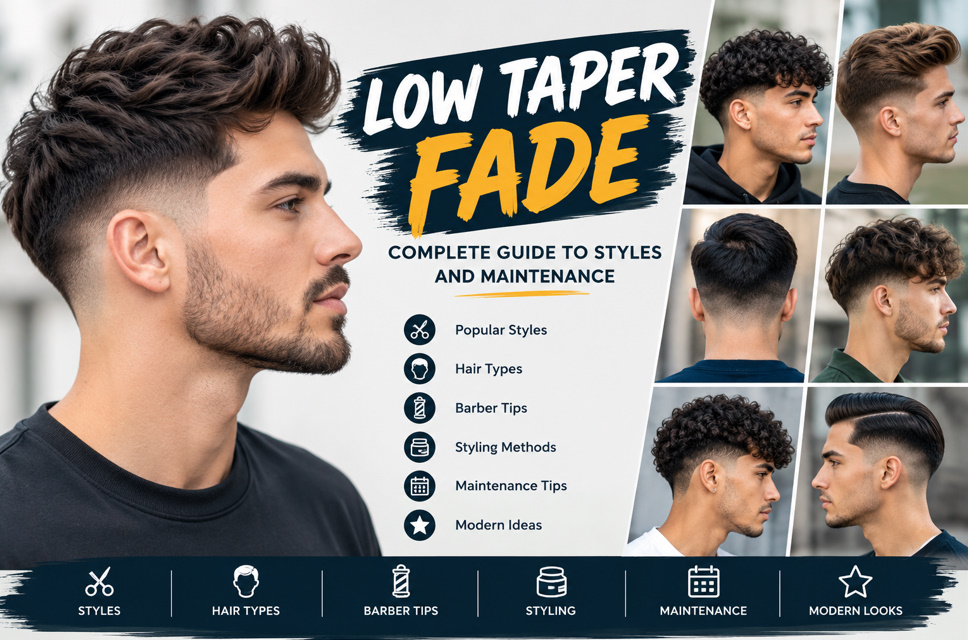
What Is a Low Taper Fade?
A low taper fade is a haircut that gradually reduces hair length around the lower sideburns, ears, and neckline. The transition stays low rather than climbing toward the temples. This creates a subtle, clean appearance while preserving more fullness through the sides and top.
The haircut is defined by a smooth gradient rather than a hard line or sudden change in length. Because the taper is concentrated around the lower edges, it can complement short, medium, or longer hairstyles on top. Straight, wavy, curly, and coily textures can all be adapted to this versatile haircut.
- Low fade placement
- Gradual blending
- Clean sideburns
- Tapered neckline
- Fuller sides
- Flexible top
- Smooth transition
- Modern finish
Low Taper Fade vs. Low Fade
A low taper fade and a low fade are closely related, but the amount of hair removed can differ. A low taper generally concentrates the shortening around the sideburns and neckline, leaving much of the side panel fuller. A low fade typically creates a broader continuous faded area around the lower sides and back.
This difference matters when describing your preferred haircut to a barber. If you want a subtle transition and more natural side volume, specifically request a low taper. If you want more of the lower sides blended shorter, a low fade may create that broader effect. Barber terminology can vary, so a reference photo can help.
- Low taper stays compact
- Low fade covers more area
- Taper keeps side weight
- Fade gives stronger contrast
- Both use low placement
- Top length remains flexible
- Terminology may vary
- Photos improve clarity
Popular Low Taper Fade Styles
The low taper fade works as a foundation for numerous hairstyles. Popular combinations include textured crops, curly tops, waves, fringes, side parts, messy styles, and longer brushed-back hair. The taper keeps the perimeter neat while allowing the top to carry the hairstyle’s main texture, volume, and personality.
A textured crop can create an easygoing finish, while a side part gives the haircut a more structured appearance. Curly and coily hair can retain natural definition, and wavy hair can emphasize movement. Keeping extra length on top also allows more styling flexibility without changing the low taper itself.
- Textured crop
- Curly top
- Wavy top
- Side part
- Natural fringe
- Messy texture
- Brushed-back top
- Longer hairstyle
Low Taper Fade for Different Hair Types
A low taper fade can be adapted to different hair textures because most of the shortening happens around the lower edges. Straight hair can create a smooth silhouette, while wavy hair naturally adds movement. Curly and coily hair can retain volume and definition on top while the sideburns and neckline receive a clean, controlled finish.
Hair density also influences the final shape. Thick hair may need careful weight management, while fine hair can benefit from keeping enough length to maintain fullness. A barber can adjust the taper according to natural growth patterns, texture, density, and the amount of volume you want to preserve.
- Straight hair
- Wavy hair
- Curly hair
- Coily hair
- Thick hair
- Fine hair
- Dense hair
- Textured hair
Low Taper Fade for Different Face Shapes
A low taper fade offers flexibility because it preserves more hair around the upper sides than many higher fade styles. The top can then be customized to change the overall silhouette. Rather than treating face shape as a strict rule, consider your natural hairline, hair density, preferred length, and how you normally style your hair.
Different top styles can create different visual effects. A textured or moderately elevated top changes the silhouette, while a shorter top keeps the profile more compact. The low taper itself remains relatively subtle, allowing the hairstyle to be personalized without dramatically changing the natural proportions of the haircut.
- Oval face shape
- Round face shape
- Square face shape
- Long face shape
- Heart face shape
- Adjustable top
- Natural proportions
- Custom silhouette
How to Ask a Barber for a Low Taper Fade
Clear communication is important when requesting a low taper fade. Tell your barber that you want the taper kept low around the sideburns, ears, and neckline. Then explain how much length you want to preserve above the ears and describe your preferred hairstyle on top.
You can also specify whether you want a subtle or closer finish at the shortest point. If you are unfamiliar with barber terminology, bring a reference photograph and point out the features you prefer. This can make it easier to communicate the desired taper height, side length, neckline, and top style.
- Request a low taper
- Mention sideburns
- Specify neckline
- Discuss side length
- Explain top length
- Choose shortest length
- Describe the finish
- Bring a reference photo
Low Taper Fade Maintenance and Styling
A low taper fade gradually becomes softer as the hair grows. Maintenance depends on individual hair growth and how defined you want the blend to remain. Some people refresh the haircut every few weeks, while others allow more growth for a relaxed appearance. The low placement can make the grow-out less visually dramatic.
Styling mainly involves the longer hair on top. Straight hair can be brushed or parted, while wavy hair can be shaped to emphasize natural movement. Curly and coily textures can retain their natural pattern. A suitable styling product may add definition or control, but the amount needed depends on hair texture and the desired finish.
- Maintain the neckline
- Refresh sideburns
- Schedule regular trims
- Style the top
- Use suitable products
- Preserve natural texture
- Avoid excess product
- Keep edges tidy
Low Taper Fade Ideas for a Modern Look
Modern low taper fade hairstyles often combine precise edging with natural-looking texture. A textured crop provides a contemporary short style, while curls and waves preserve natural movement. A fringe, side part, or brushed-back top can create a more structured appearance while keeping the actual taper low and subtle.
The versatility of the haircut comes from separating the taper from the top style. You can keep the top short for easy daily grooming or maintain additional length for more styling choices. This makes the low taper fade suitable for casual, polished, textured, and everyday hairstyles.
- Textured crop
- Curly top
- Loose waves
- Side fringe
- Side part
- Brushed-back style
- Messy texture
- Clean neckline
Things to Consider Before Getting a Low Taper Fade
Before choosing a low taper fade, consider how much contrast you want between the sides and top. A softer taper preserves more side weight, while a closer finish can make the lower transition more noticeable. Think about your natural hair texture, growth pattern, preferred top length, and everyday styling routine.
Maintenance should also influence your decision. If you prefer simple grooming, choose a top style that naturally works with your hair. If you enjoy changing hairstyles, preserving more length gives you additional options. Discussing these preferences with your barber can help create a personalized low taper fade that matches your desired appearance.
- Choose taper height
- Decide shortest length
- Consider side volume
- Check hair texture
- Select top length
- Consider maintenance
- Discuss neckline shape
- Share hairstyle inspiration