
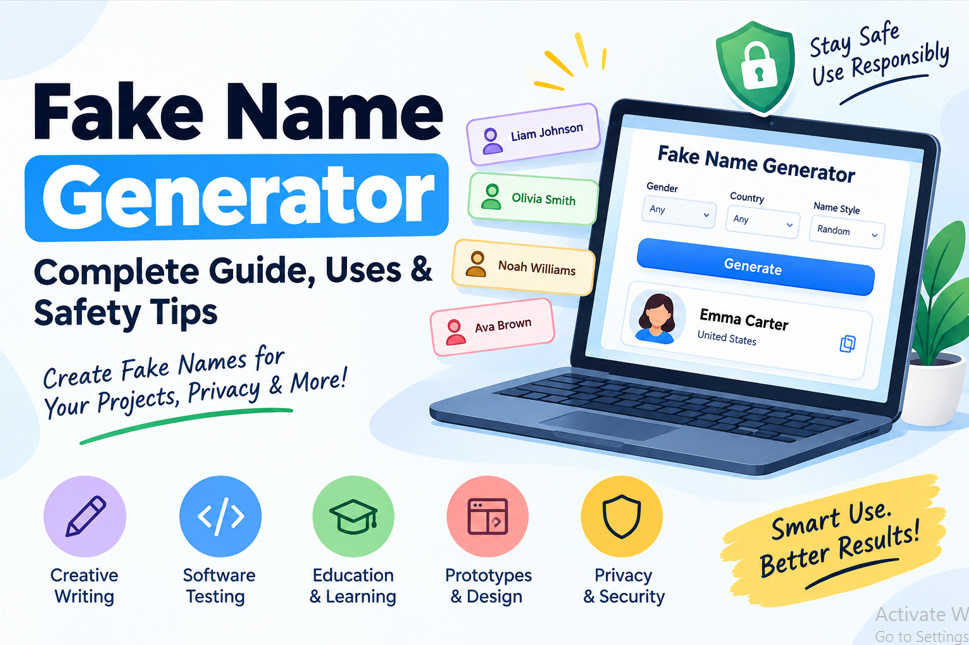
A fake name generator can quickly create fictional names for creative writing, software testing, mockups, educational examples, and other legitimate purposes. Because these tools are easy to use, beginners may sometimes overlook important privacy, ethical, and practical considerations when using generated information.
Understanding the dos and don’ts of a fake name generator helps you get useful results while avoiding unnecessary risks. Whether you need a fictional character name or synthetic test data, the goal should be responsible, transparent, and appropriate use of randomly generated information.
Do Use Fake Names for Legitimate Purposes
The first rule is to have a clear and legitimate reason for generating a fictional name. Common appropriate uses include creating characters, testing software, building prototypes, preparing demonstrations, developing educational examples, and brainstorming creative ideas.
A generated name can be an excellent substitute for real personal information when real data is unnecessary. Before using one, consider whether the task actually requires a name and whether fictional information can accomplish the same objective without creating confusion or misleading anyone.
- Define your purpose
- Use fictional information
- Support creative projects
- Create test records
- Build prototypes
- Prepare examples
- Use placeholder names
- Keep usage appropriate
Don’t Use Generated Names for Fraud or Deception
A fake name generator should never become a tool for dishonest activity. Using a fictional identity to commit fraud, deceive people, impersonate someone, obtain benefits dishonestly, or manipulate organizations can create serious ethical and legal problems.
There is an important difference between synthetic data and deceptive identity information. A fictional name used inside a development database is generally very different from presenting that name as your verified identity to a service that requires accurate information. Always respect the purpose and rules of the platform you are using.
- Don’t commit fraud
- Don’t impersonate others
- Don’t deceive organizations
- Don’t create fraudulent accounts
- Don’t misrepresent identity
- Don’t bypass security
- Don’t manipulate verification
- Don’t misuse generated data
Do Protect Real Personal Information
One useful application of a fake name generator is creating fictional placeholders when real names are unnecessary. Designers, developers, students, and content creators can use synthetic names in mockups, demonstrations, sample documents, and test environments.
Using fictional information can support data minimization, which means avoiding unnecessary collection or exposure of personal details. However, replacing your name does not automatically make you anonymous. Other information, such as cookies, account details, device information, or network data, may still identify or track users.
- Minimize personal data
- Use fictional placeholders
- Protect real identities
- Avoid unnecessary information
- Separate test data
- Review privacy practices
- Protect sensitive records
- Share only necessary details
Don’t Assume a Fake Name Guarantees Anonymity
A common misconception is that entering a generated name automatically makes someone anonymous online. It does not. A website or application may collect information unrelated to your name, including browser characteristics, cookies, IP information, device details, or account identifiers.
Privacy depends on the entire digital environment rather than one field in a form. Before providing information, understand what the service requires and what information it collects. A fake name should therefore be viewed as fictional data, not as a complete privacy or anonymity solution.
- Don’t assume anonymity
- Don’t ignore privacy policies
- Don’t share unnecessary data
- Don’t overlook cookies
- Don’t ignore account information
- Don’t trust anonymity claims blindly
- Don’t expose sensitive details
- Don’t confuse privacy with secrecy
Do Check Names for Context and Accuracy
Generated names should make sense for the purpose you have in mind. If you are writing a character, consider their age, location, background, personality, and setting. If you are creating test data, consider name length, spelling, formatting, and how the application handles different inputs.
Checking the result is particularly important when using regional or culturally specific names. A random result may not always perfectly reflect real naming conventions. Treat the generator as an inspiration or synthetic-data tool and use your own judgment when evaluating the output.
- Review generated names
- Check spelling
- Consider pronunciation
- Match the context
- Consider cultural relevance
- Check name length
- Compare alternatives
- Edit when necessary
Don’t Treat Every Generated Name as Unique
Random generation does not mean that every name is globally unique. A generated combination of a first name and surname may coincidentally belong to an actual person. This possibility is especially important when creating public content, fictional profiles, or examples that could be mistaken for real identities.
If uniqueness matters for your project, modify the generated result or combine it with clearly fictional context. For software testing, uniqueness can usually be handled through test identifiers rather than relying solely on names. Always remember that realistic names can naturally overlap with real-world identities.
- Don’t assume uniqueness
- Don’t claim a name is real
- Don’t identify fictional profiles as people
- Don’t use names as identity proof
- Check important public examples
- Add fictional context
- Use test IDs when appropriate
- Review results carefully
Do Use Synthetic Data for Testing and Development
Developers can benefit greatly from fictional names when testing websites, applications, databases, forms, dashboards, and user interfaces. Synthetic records allow developers to examine how systems handle different names without unnecessarily exposing real customer or employee information.
Create test scenarios that represent the range of data your application may encounter. Include short and long names, different formatting patterns, and diverse fictional records. Clearly separate test information from production data so that generated names do not accidentally become confused with genuine customer records.
- Create test users
- Populate development databases
- Test registration forms
- Check profile displays
- Test search functions
- Test sorting features
- Create sample records
- Keep test data separate
Don’t Use Fake Data Where Genuine Identity Is Required
Some services require accurate identity information for legitimate reasons. Financial services, legal processes, identity verification, employment documentation, age verification, and similar situations may require truthful information. A generated name should never be used to circumvent these requirements.
Using fictional information in a system that explicitly requires your real identity can result in account restrictions, failed verification, loss of access, or other consequences. When a service asks for accurate personal information, follow its requirements instead of attempting to substitute randomly generated data.
- Don’t bypass KYC
- Don’t evade identity checks
- Don’t falsify documents
- Don’t misrepresent age
- Don’t create false credentials
- Don’t evade legal requirements
- Don’t deceive financial services
- Follow verification rules
Do Follow Ethical and Responsible Practices
Responsible use brings together privacy, honesty, security, and common sense. Use fake names when they genuinely solve a legitimate problem, such as fictional storytelling or software testing. Keep generated information clearly separated from real personal records and avoid using it in situations where accuracy is essential.
It is also helpful to understand the limitations of your chosen generator. Consider what information it produces, how much information you actually need, and whether the output could unintentionally resemble a real person’s identity. Responsible use ensures that a useful tool remains useful without creating unnecessary problems.
- Have a legitimate purpose
- Use synthetic information
- Protect real people
- Follow service rules
- Review generated results
- Limit unnecessary data
- Separate fictional records
- Use common sense
Frequently Asked Questions About Fake Name Generator Dos and Don’ts
What is the most important rule when using a fake name generator?
Use it for legitimate purposes such as creative writing, software testing, educational examples, prototypes, demonstrations, and fictional projects.
Can I use a generated name for a fictional character?
Yes. Creating character names is one of the most appropriate uses. You can generate several options and select or modify one that fits your story.
Should I use a fake name to protect my privacy?
A fictional name can be useful as a placeholder where a real name is unnecessary, but it does not guarantee complete anonymity or online privacy.
Can I use fake names in software testing?
Yes. Synthetic names are useful for testing databases, forms, search functions, user interfaces, and other application features.
Should I assume a generated name is unique?
No. A generated name may coincidentally match the name of a real person. Random generation does not guarantee global uniqueness.
Can I use a fake name for identity verification?
No. If a service requires genuine identity information, using a generated name to bypass verification is inappropriate and potentially unlawful.
Can fake names be used in public examples?
Yes, provided they are clearly presented as fictional or sample information. Avoid suggesting that a fictional profile represents a real person.
Does a fake name protect all my personal information?
No. Other information, including technical and account-related data, may still be collected. A fake name is only one element of privacy-conscious data handling.
Using a fake name generator responsibly is primarily about knowing when fictional information is appropriate and when it is not. Do use generated names for writing, testing, education, prototypes, brainstorming, and legitimate placeholders. Don’t use them for fraud, impersonation, deception, or bypassing identity requirements.
The best approach is simple: use synthetic data when real data is unnecessary, protect personal information, check your generated results, and respect the rules of every service you use. This allows you to enjoy the convenience of a fake name generator while maintaining ethical, safe, and responsible practices.