
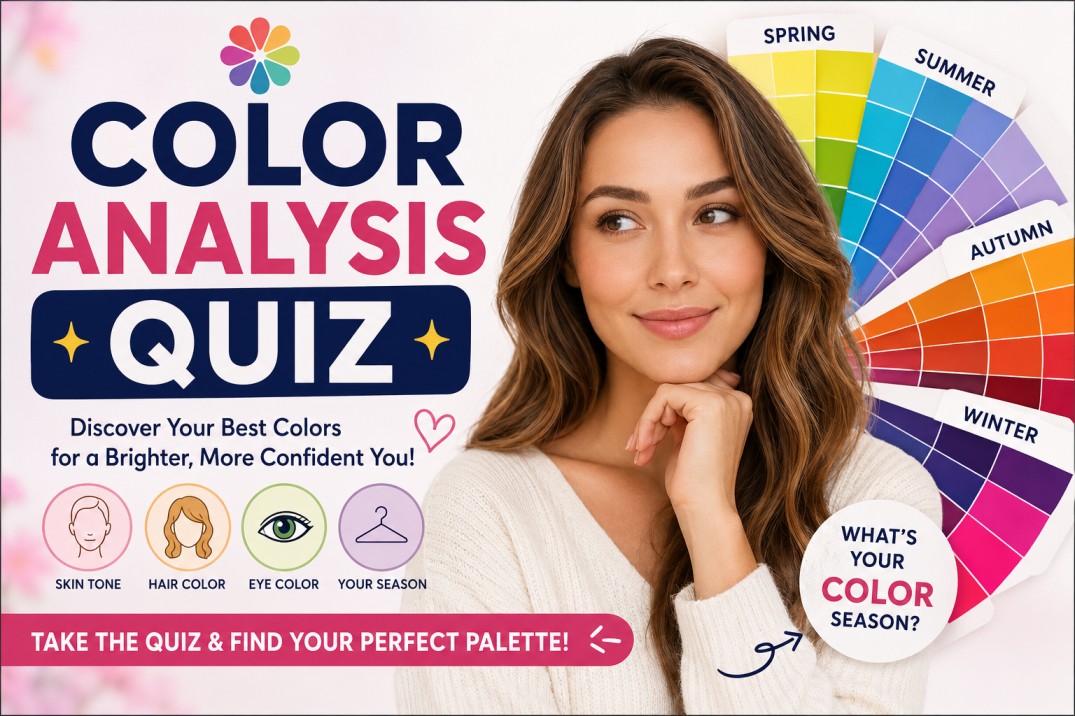
Finding colors that naturally complement your appearance can make choosing clothes, makeup, and accessories much easier. A color analysis quiz helps you explore which shades may enhance your overall look. By considering factors such as skin undertone, hair color, and eye color, you can discover a more personalized color palette. ✨
- 🎨 Colors can influence your overall appearance.
- 👗 The right shades can brighten your look.
- 💄 Your palette can guide makeup choices.
- 🌸 Different people suit different colors.
- ✨ A quiz makes exploration simple.
- 🪞 Your personal style still matters most.
1. What Is a Color Analysis Quiz? 🔍
A color analysis quiz is a simple way to explore which colors may complement your natural features. It usually considers characteristics such as undertone, hair, eyes, and contrast. The results can suggest color families or seasonal palettes that help you make more confident fashion and beauty choices without making your style feel complicated. 🌟
- 📝 The quiz asks simple questions.
- 🎨 Answers help identify color preferences.
- 👚 Clothing colors are often considered.
- 💋 Makeup shades may also be included.
- 🌈 Results can suggest a color family.
- ✨ The goal is easier styling.
2. Why Does Color Analysis Matter? 💡
Color can dramatically affect how an outfit appears on you. Some shades may make your complexion look fresh and vibrant, while others can appear less harmonious. Color analysis gives you a practical starting point for understanding these differences. It can simplify shopping, outfit planning, makeup selection, and everyday styling decisions. 👗
- 🌟 Some colors create a brighter appearance.
- 🧥 Clothing choices can become easier.
- 💄 Makeup selection may feel simpler.
- 🛍️ Shopping can become more focused.
- 🎯 A palette reduces unnecessary choices.
- 😊 Confidence can grow with experimentation.
3. Understanding Skin Undertones 🧴
Skin undertone is one of the most commonly discussed elements in color analysis. Unlike surface skin tone, which can change with tanning or other factors, undertone refers to the subtle color beneath the skin. Color analysis often describes undertones as warm, cool, or neutral, although real-world coloring can be more nuanced. 🌸
- 🔥 Warm undertones often lean golden.
- ❄️ Cool undertones can lean pinkish.
- ⚖️ Neutral undertones may combine characteristics.
- 🌞 Surface skin tone is different.
- 🪞 Lighting can affect what you see.
- 🎨 Testing colors can provide useful clues.
4. The Four Color Seasons Explained 🌷
Many color analysis systems organize palettes into four broad seasons: Spring, Summer, Autumn, and Winter. Each season represents combinations of characteristics such as warmth, coolness, brightness, softness, and depth. A quiz may use your answers to suggest a seasonal category and provide examples of colors associated with it. 🍂
- 🌷 Spring palettes are often warm and bright.
- 🌊 Summer palettes are generally cool and soft.
- 🍁 Autumn palettes often appear warm and rich.
- ❄️ Winter palettes are commonly cool and vivid.
- 🎨 Each season contains many shades.
- ✨ Your palette can be more flexible than a label.
5. How to Take a Color Analysis Quiz 📋
For useful results, answer a color analysis quiz as honestly as possible. Think about your natural hair, eyes, and skin characteristics rather than focusing only on favorite colors. If the quiz includes questions about how particular shades look on you, consider your appearance in natural daylight for a more consistent comparison. ☀️
- 📋 Read every question carefully.
- 🪞 Consider your natural coloring.
- ☀️ Natural light can help comparisons.
- 🎨 Avoid choosing answers only by preference.
- 👗 Think about colors you already wear.
- ✨ Treat the result as guidance.
6. Using Your Results for Fashion 👚
Once you receive your color analysis result, you can use it as a styling guide rather than a strict rulebook. Start by identifying a few recommended colors that you genuinely enjoy. Gradually introduce them through tops, dresses, scarves, accessories, or other pieces to see how they work with your existing wardrobe. 🛍️
- 👕 Start with easy everyday pieces.
- 🧣 Accessories are simple ways to experiment.
- 👗 Try recommended colors near your face.
- 👜 Use accent shades for variety.
- 🎨 Keep colors you personally love.
- ✨ Your wardrobe should still feel like you.
7. Color Analysis for Makeup 💄
Color analysis can also inspire makeup choices. Your undertone and overall coloring may help you explore foundation, blush, lipstick, and eyeshadow shades that create a harmonious appearance. However, makeup is highly personal, so your comfort and preferences should remain important when experimenting with different colors and finishes. 💋
- 💄 Explore lipstick shades within your palette.
- 🌸 Try different blush tones.
- 👁️ Experiment with complementary eyeshadows.
- ✨ Consider your preferred makeup finish.
- 🪞 Test products before committing.
- 💕 Personal preference always matters.
8. Make Your Color Palette Work for You ✨
The best color palette is one that makes styling enjoyable rather than restrictive. Your color analysis quiz result should give you ideas, not impose rigid fashion rules. Experiment with different shades, combine recommended colors with neutrals, and pay attention to what makes you feel confident. Your personal style is ultimately your own. 🌈
- 🎨 Use your results as inspiration.
- 👗 Mix colors with your favorite neutrals.
- 🌈 Experiment beyond your suggested palette.
- 🛍️ Shop with your colors in mind.
- 😊 Wear shades that make you feel confident.
- ✨ Let your personality guide your style.