
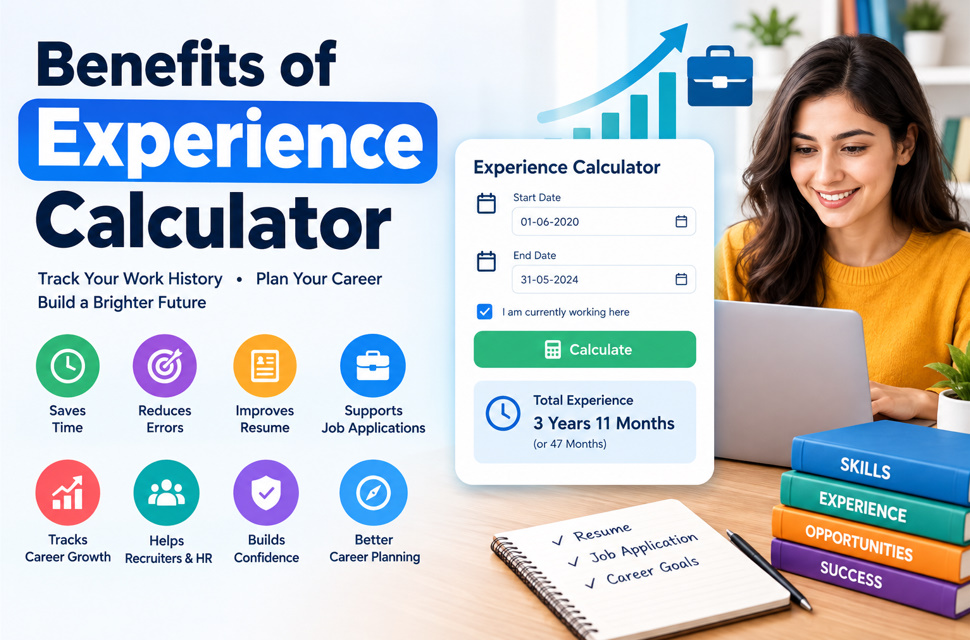
An Experience Calculator is a practical online tool designed to calculate the total amount of professional or work experience between two dates. Instead of manually counting years, months, and days, users can enter a starting date and ending date to receive a quick and organized result.
For job seekers, employees, recruiters, students, and HR professionals, an experience calculator can make career-related calculations easier. It reduces repetitive date calculations and helps users understand their employment history, career duration, and professional experience with greater convenience.
What Is an Experience Calculator?
An Experience Calculator is a date-based tool that determines the duration between two employment or career dates. Depending on the calculator, the result may be displayed in years, months, and days. Some advanced calculators can also calculate multiple employment periods and combine them into an overall experience total.
The tool is especially useful when someone needs to calculate work experience for a resume, CV, job application, promotion, interview, or professional profile. By automating date calculations, it provides a simple way to convert employment dates into an understandable experience period.
- Calculates work duration
- Uses start and end dates
- Shows years and months
- Reduces manual calculations
- Supports career tracking
- Helps prepare resumes
- Simplifies employment history
- Provides quick results
How Does an Experience Calculator Work?
Most experience calculators use a straightforward date-difference process. The user enters the date they started a job, internship, contract, or other professional activity and then enters the relevant end date. The calculator processes these dates and determines the elapsed period between them.
Some tools allow users to select the current date when employment is ongoing. More advanced versions can handle several employment periods and provide a combined experience figure. This makes the calculator useful for people who have worked at multiple companies or held several positions.
- Enter the starting date
- Select the ending date
- Choose the current date if applicable
- Submit the information
- Let the tool process dates
- Review the calculated duration
- Check years and months
- Record the final result
How to Use Experience Calculator
Using an Experience Calculator generally requires only a few simple steps. First, enter the date when your employment or professional activity began. Next, provide the end date. If you are still working in that position, many calculators allow you to use the current date instead.
After entering the information, click the calculation button and review the result. If you have experience from several jobs, internships, or contracts, enter each period when supported. Always check your original employment records if an exact duration is important for an official application.
- Open the calculator
- Enter your start date
- Enter your end date
- Select an active-job option
- Add additional work periods
- Click calculate
- Review the result
- Verify important dates
Benefits of Experience Calculator for Job Seekers
One of the biggest benefits of an Experience Calculator is convenience for job seekers. Preparing a resume often requires accurate information about previous employment. Instead of estimating experience or counting calendar periods manually, applicants can use a calculator to determine the duration of each role.
Accurate experience information can also make job applications easier to complete. When an employer asks for total professional experience, candidates can use calculated figures as a reference. This can help prevent common mistakes caused by forgetting months, confusing dates, or incorrectly adding employment periods.
- Saves valuable time
- Supports resume preparation
- Helps complete applications
- Improves date accuracy
- Reduces calculation mistakes
- Organizes employment history
- Helps estimate total experience
- Supports interview preparation
Benefits of Experience Calculator for HR and Recruiters
HR professionals and recruiters frequently review employment histories, resumes, and applications. An experience calculator can simplify the process of checking how long candidates have worked in particular roles. It provides a consistent method for calculating employment duration when reviewing multiple applicants.
For organizations, standardized calculations can make candidate screening more efficient. Recruiters can quickly estimate whether an applicant meets an experience requirement, such as two years, five years, or a specific number of months. However, calculated experience should still be verified against employment records when accuracy is critical.
- Speeds up candidate screening
- Simplifies experience verification
- Supports recruitment workflows
- Helps compare employment periods
- Reduces manual date counting
- Improves administrative efficiency
- Assists requirement checking
- Organizes candidate information
How Experience Calculator Helps With Career Planning
Career planning often involves understanding how much professional experience has been gained over time. An Experience Calculator makes this information easier to visualize. Employees can calculate their experience in a particular profession, industry, company, or role and use the result when considering future career opportunities.
Knowing your approximate experience duration can also help with professional development. For example, an employee may discover that they have accumulated several years of experience and may be ready to pursue a more advanced position, certification, responsibility, or career goal.
- Tracks professional growth
- Supports career planning
- Measures employment duration
- Helps identify milestones
- Encourages organized recordkeeping
- Supports promotion planning
- Helps prepare career profiles
- Clarifies professional timelines
Experience Calculator for Multiple Jobs and Employment Periods
Many professionals have experience across several employers. Calculating each period separately and adding the results manually can become confusing, particularly when employment dates span different months and years. A calculator that supports multiple periods can simplify this process and provide a consolidated experience estimate.
This feature is particularly helpful for freelancers, consultants, contractors, part-time workers, and professionals with varied career histories. Users can maintain a clearer record of their professional timeline and understand the overall duration of their work experience.
- Handles multiple jobs
- Tracks different employers
- Supports career transitions
- Combines employment periods
- Helps organize job history
- Useful for contractors
- Benefits freelancers
- Simplifies complex timelines
Why Use an Experience Calculator Instead of Manual Calculation?
Manual date calculation can seem easy when dealing with one short period, but it becomes more difficult with multiple jobs and different calendar months. Months have different numbers of days, and leap years can introduce additional complexity. An automated calculator handles these date differences systematically.
Using an online experience calculator also reduces repetitive work. Rather than repeatedly counting months and years, users can enter their dates and receive a result within seconds. This makes the tool a useful resource for anyone who regularly needs employment duration or career experience calculations.
- Eliminates repetitive counting
- Handles calendar differences
- Reduces arithmetic errors
- Saves calculation time
- Works with multiple dates
- Provides structured results
- Improves convenience
- Supports efficient recordkeeping
Tips for Getting Accurate Results From an Experience Calculator
The quality of a calculated result depends on the dates entered. Users should check employment contracts, joining letters, relieving letters, resumes, or other reliable records before entering dates. Using the correct start and end dates helps produce a more dependable experience calculation.
It is also important to understand what the result represents. Total calendar duration may not always equal officially recognized experience because organizations can apply different rules for overlapping jobs, internships, part-time work, career gaps, or relevant industry experience.
- Verify your start date
- Check your end date
- Avoid estimated dates
- Review employment records
- Check overlapping periods
- Understand employer requirements
- Keep results for reference
- Verify official experience when needed